There are some caregiving lessons you don’t learn from a handbook.
You learn them from the moments you wish you could go back and change.
When I worked in senior living, there was a woman who was showing signs that she needed more support than she was receiving.
I’ve seen this happen more than once. Families can struggle to recognize when a loved one needs a higher level of care. Sometimes they’re not emotionally ready, and sometimes finances make the decision even more difficult.
But dementia doesn’t wait for a family to be ready.
The Day That Stayed With Me
This resident wore a medical alert pendant.
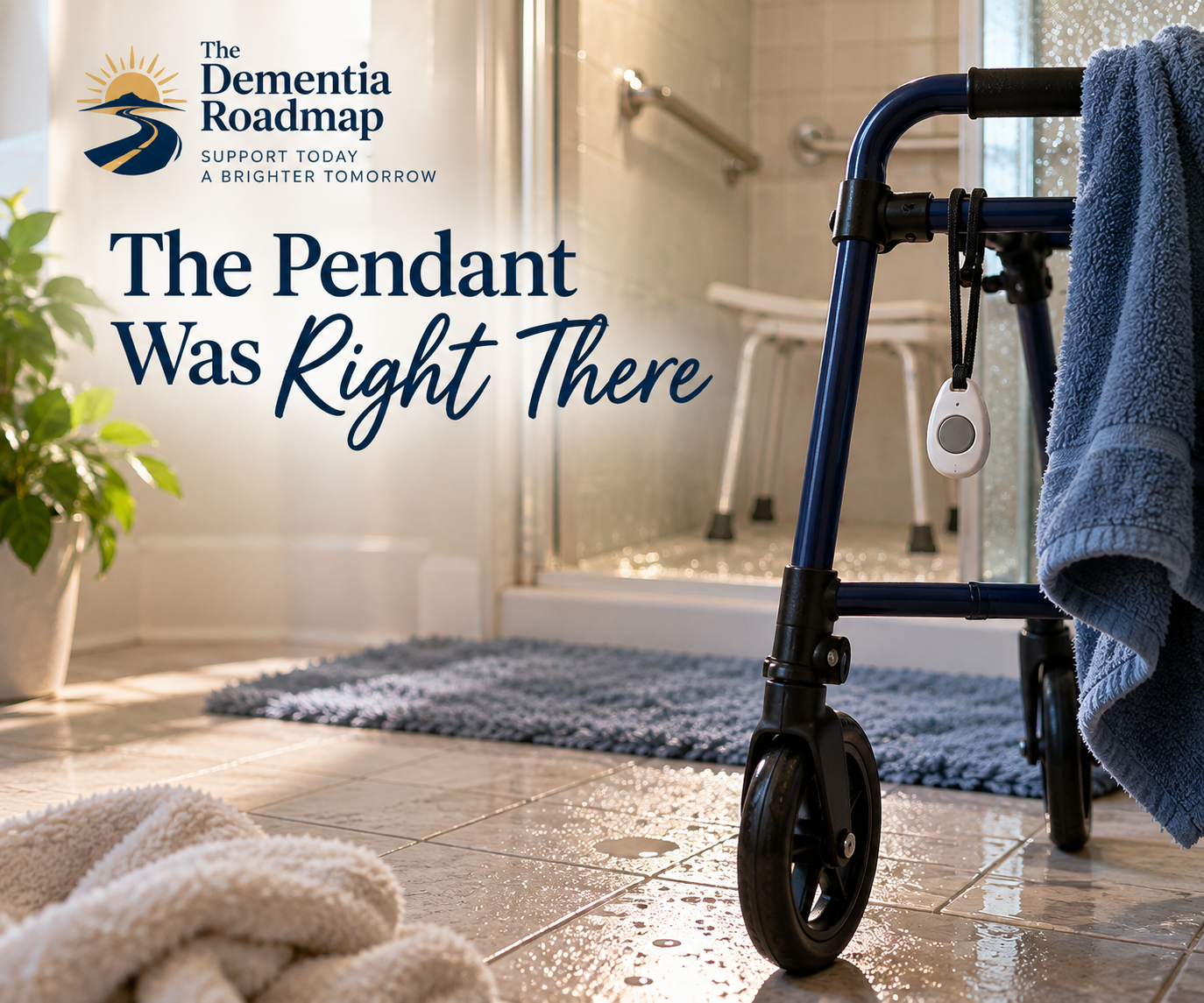
One day, she went into the shower and placed her pendant on her walker.
It was right there.
Or at least, it seemed like it was.
While she was in the shower, she slipped and fell.
The walker rolled away across the floor, taking the pendant with it.
She couldn’t get up.
And now the pendant that was supposed to help her was out of reach.
The situation became even more serious because the hot water continued running, and she was burned while she was unable to get up.
The Lesson Stayed With Me
A medical alert pendant doesn’t help much if it’s sitting on a walker across the room.
It needs to be on the person.
This experience also reminded me of something much bigger.
When someone living in an independent living setting begins having difficulty safely managing everyday activities, that’s a sign that the situation needs to be looked at honestly.
That doesn’t necessarily mean someone needs memory care tomorrow.
But it does mean we shouldn’t ignore the signs simply because we’re not ready for the conversation.
Families may see their loved one every day and still have difficulty recognizing how much things have changed. That’s understandable. It’s emotional. It’s difficult. And sometimes cost becomes part of the decision.
But safety has to be part of the conversation, too.
The goal isn’t to take away someone’s independence.
The goal is to make sure they’re living in an environment where they can be safe, supported, and as independent as possible.
And if someone is beginning to need more help than independent living can safely provide, waiting for a crisis isn’t always the best way to make that decision.
Sometimes the warning signs are already there.
Sometimes, the pendant is right there—but the person can’t reach it.