
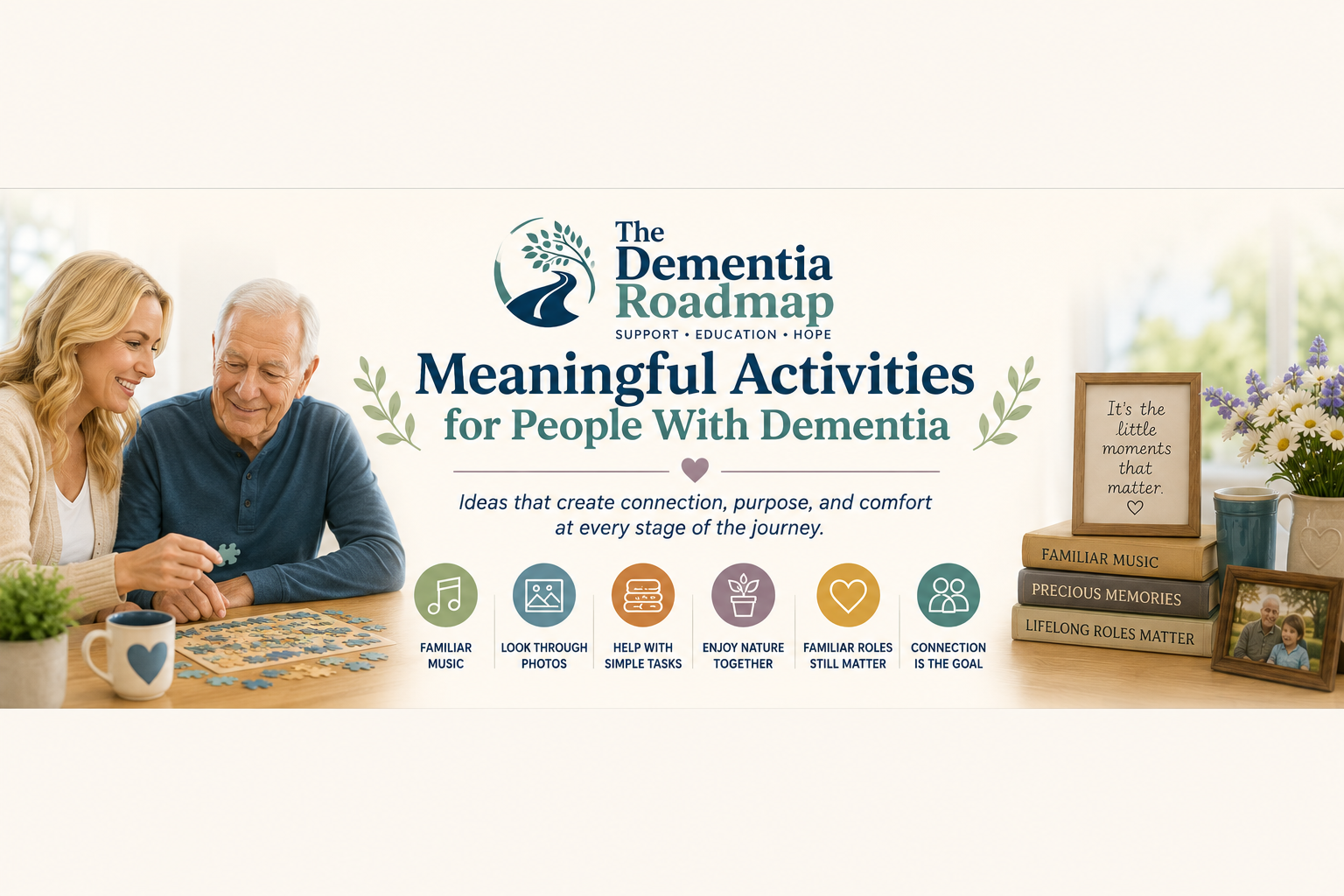
Meaningful activities can provide comfort, purpose, connection, and enjoyment for a person living with dementia. The goal is not simply to keep someone busy. Activities are most helpful when they connect with the person’s interests, abilities, routines, and the things that have mattered to them throughout their life.
Start With the Person, Not the Activity
Think about who the person has always been. Their former work, hobbies, family roles, interests, routines, and favorite pastimes can provide clues about activities they may still enjoy. A former teacher might enjoy sorting papers or reading aloud, a homemaker may find comfort folding towels, a mechanic might enjoy sorting safe tools or hardware, and someone who loved gardening may enjoy watering plants or arranging flowers.
The Activity Doesn’t Have to Be Done “Correctly”
The purpose of an activity is not necessarily to complete a task perfectly. Someone may fold the same towel repeatedly, sort objects in an unusual way, or stop halfway through an activity. That is okay. If the activity is safe and the person appears comfortable or engaged, the experience itself may be more important than the finished result.
Familiar Roles Can Still Bring Purpose
Lifelong roles and habits can remain meaningful even when memory has changed. A veteran may still salute, someone who cared for children may enjoy holding or caring for a doll, and a person who spent years working with their hands may enjoy simple sorting or organizing tasks. Rather than dismissing these behaviors, look for safe ways to support the familiar role or feeling behind them. It can provide comfort, identity, and a sense of purpose.
Keep Activities Simple and Flexible
Activities do not need to be complicated or expensive. Listening to familiar music, looking through photographs, folding laundry, sorting objects, watering plants, taking a short walk, coloring, helping prepare a simple snack, or sitting outside together can all be meaningful. Adjust the activity to the person’s abilities, and be willing to simplify or stop if they become tired, frustrated, or overwhelmed.
Use Music to Create Connection
Familiar music can be especially meaningful for people living with dementia. Songs connected to earlier years may encourage singing, movement, smiles, or memories even when conversation has become difficult. Try music the person has always enjoyed and watch their response. The goal is not to test whether they remember the song—it is simply to create a moment they can enjoy.
Everyday Moments Count, Too
Not every meaningful activity needs to be planned. Sitting together on the porch, helping set the table, watching birds outside, brushing a pet, having a cup of coffee, or simply listening to someone talk can provide connection and purpose. Sometimes the most meaningful moments are the ordinary ones that still feel familiar.
Follow Their Lead
A person’s abilities, energy, and interests may change from day to day. An activity they enjoyed yesterday may not interest them today, and that is okay. Watch for signs of enjoyment as well as frustration or fatigue. If something is not working, simplify it, try something different, or come back to it another time. Meaningful engagement should feel supportive, not like another task they have to complete.
Connection Is the Goal
Meaningful activities are not about filling every hour of the day. They are opportunities to help a person feel included, capable, comforted, and connected to the people and world around them. Even when an activity lasts only a few minutes, the feeling it creates can still matter.
There is no single activity that works for everyone with dementia. Pay attention to the person in front of you—their history, preferences, abilities, and response in the moment. Sometimes a familiar song, a simple task, or quietly sitting together can provide exactly the connection they need.